Highlights
- The right manual wheelchair should match your mobility needs, body dimensions and daily activities.
- Seat width and depth affect comfort, posture and movement.
- Wheel size and frame design influence manoeuvrability and transport.
- Adjustable seating and support features can accommodate changing needs.
- Brakes and anti-tip devices can contribute to safer everyday use.
- Trialling a wheelchair can help determine whether its features suit you.
What Should You Look for in a Manual Wheelchair?
You should choose a manual wheelchair based on your body, mobility requirements and usual environment rather than appearance or one particular feature. Seat dimensions, frame design, wheel configuration, brakes, footrests and back support can all affect comfort and practicality.
Your needs may differ depending on whether you primarily use the wheelchair indoors, outdoors, for short trips or throughout the day.
According to the Australian Government Department of Veterans’ Affairs, assessing body dimensions and weight, functional skills, and home layout and access is essential when determining the safest and most appropriate wheelchair. This shows why personal requirements should come before individual features when comparing manual wheelchairs.
How Important Are Seat Width and Depth?
Seat width and depth are important because they affect posture, comfort and propulsion. A seat that is too narrow can feel restrictive, while excessive width can make the chair harder to control. Seat depth should support your body without creating unnecessary pressure behind the knees.
The frame should also match your body shape rather than simply being selected according to a standard size. Your cushion, seating position and transfer technique can influence the appropriate configuration. Taking accurate measurements before ordering is therefore an important part of selecting a wheelchair that feels comfortable and functions properly during everyday use.
Which Features Can Improve Comfort and Support?
Comfort depends on the seat, backrest, cushion, armrests, leg supports and footplates. Useful features can include:
- Adjustable backrests: Provide flexibility for upper-body positioning.
- Supportive cushions: Offer different levels of comfort and support.
- Adjustable armrests: Accommodate different seating positions.
- Swing-away leg rests: Can make transfers easier.
- Adjustable footplates: Help accommodate different leg lengths.
- Tilt-in-space: Changes the seating angle while maintaining the user’s position.
Not everyone needs every feature. Additional components can increase weight and complexity, so each should have a practical purpose based on your individual requirements.
How Do Wheel Size and Frame Design Affect Performance?
Wheel configuration and frame design affect manoeuvrability, propulsion and portability. Larger rear wheels with hand rims are common on self-propelled models, while smaller rear wheels are generally associated with transit wheelchairs pushed by an attendant. Frame construction can also affect how the wheelchair responds during movement and how easily it can be transported.
According to the Agency for Clinical Innovation, manual wheelchair configuration must balance stability, manoeuvrability and preservation of upper limb function. It notes that a highly stable configuration can reduce manoeuvrability, while a highly manoeuvrable configuration may not provide sufficient stability for some users.
Which Safety Features Should You Consider?
Safety features should be considered alongside comfort and mobility. Brakes should be accessible and straightforward to operate, particularly during transfers. Depending on your circumstances, useful features may include:
- Parking brakes: Keep the wheelchair stationary when stopped.
- Anti-tip devices: Can reduce the risk of tipping backwards.
- Pelvic belts: May provide additional positioning support where appropriate.
- Heel loops: Help keep feet positioned on footplates.
- Attendant brakes: Allow an attendant to control braking on suitable models.
Features should be selected according to your abilities and circumstances rather than added automatically. A professional assessment can help determine which options are appropriate for your intended use.
Should You Choose a Lightweight Manual Wheelchair?
A lightweight wheelchair can be useful if you regularly lift the chair into a vehicle, carry it or transport it. However, weight should not be the only consideration. A lighter model may not provide the features or support required for your daily activities.
Consider your typical routine. If you frequently travel by car, transport weight and folding capability may be priorities. If you mainly use the chair indoors, overall width and manoeuvrability may matter more. For outdoor use, stability, wheel configuration and tyre selection may become more important.
According to Queensland Health, propulsion efficiency is influenced by factors including wheelchair size and weight, wheel and tyre selection, axle position, and the adjustment of components such as the backrest and footplates. It also notes that wheelchair width affects propulsion, with wheels easier to push when positioned closer to the body.
How Can You Choose the Right Manual Wheelchair?
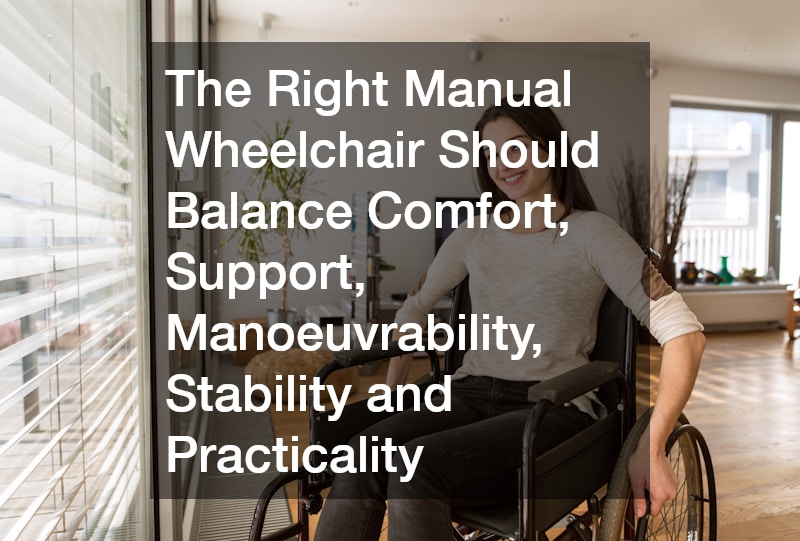
The right manual wheelchair should balance comfort, support, manoeuvrability, stability and practicality. Start with your individual requirements, then consider the features that address them. Accurate measurements, an appropriate frame and suitable components such as brakes and footrests can make everyday use more comfortable.
A professional assessment and hands-on trial can make the selection process more useful. Rather than choosing manual wheelchairs based solely on price or appearance, consider how each model performs in situations that reflect your daily life. Focusing on fit and function can help you select a wheelchair that supports your mobility needs and provides practical comfort for regular use.
Sources
- Australian Government Department of Veterans’ Affairs, Manual Wheelchair – Standard
https://www.dva.gov.au/providers/rehabilitation-appliances-program-rap/rap-schedule/manual-wheelchair-standard - Agency for Clinical Innovation, Keys to Manual Wheelchair Configuration
https://aci.health.nsw.gov.au/networks/spinal-cord-injury/spinal-seating/module-9/keys-to-manual-wheelchair-configuration - Queensland Health, Manual Wheelchairs – Information Resource for Service Providers
https://www.health.qld.gov.au/qscis/documents/manual-wheelchairs.